Reconciliation (1928)
Download: PDF — Reconciliation (1928)
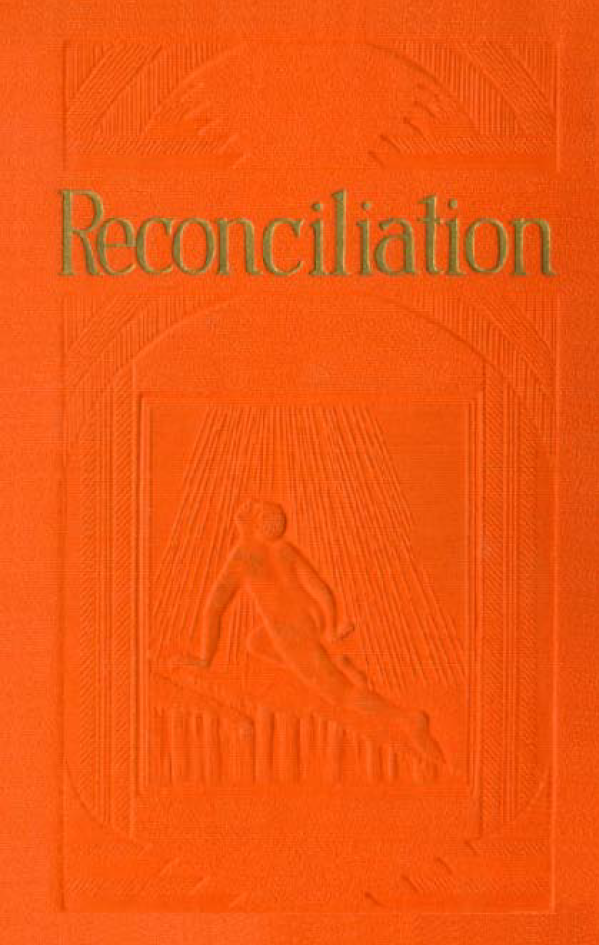
Reconciliation
A plain statement of the gracious
provision Jehovah has made to bring all men into full harmony with himself that
the obedient ones may have everlasting life on earth in contentment and
complete happiness.
By J. F. Rutherford Author of The Harp of God
Deliverance Creation Where Are the Dead? etc.
1,000,000 Edition
Publishers
International Bible Students Association
Watch Tower Bible and Tract Society Brooklyn, New York, U. S. A.
Also
London, Toronto, Melbourne, Cape Town,
Berne, Magdeburg, etc.
To the honor of JEHOVAH’S NAME This Book
Is Dedicated
“That men may know that thou, whose name
alone is J E H O VA H, art the Most High over all the earth,"—Psalm 83:18
“And I the Lord will be their God, and my
servant David a prince among them; I the Lord have spoken it. And I will make
with them a covenant of peace, and will cause the evil beasts to cease out of
the land." – Ezekiel 34:24, 25
“Truth shall spring out of the earth; and
righteousness shall look down from heaven. Yea, the Lord shall give that which
is good; and our land shall yield her increase.” —Psalm 85:11, 12
Copyright 1928 by
J. F. Rutherford
Made in U.S.A.
PREFACE
WHAT is the origin of man?
What will be man’s destiny? Why is there
so much poverty amongst men? What is the cause of sickness and death? How may
we know that man will ever be brought into full harmony with God and enjoy the
blessings of life everlasting? These and many related questions are answered in
this book. The proof given in support of the reasons assigned is so clear and
convincing that all doubt is removed. Its value to mankind at this time cannot
be overstated. The Publisher takes great pleasure in presenting this book to
the public. It is sent out with confidence that the book will be of wonderful
benefit to the people and an honor to the name of Jehovah.
THE PUBLISHER
FOREWORD
THE peoples of earth are in distress. They
want to know the real cause and what is the remedy. This book should bring
peace to the troubled souls who read, because it contains a plain statement of
the loving provision Jehovah God has made to give man everlasting life on
earth, together with all blessings incident thereto. The writer does not give
his opinion. No human interpretation of Scripture is advanced. The contents of
this book are a statement of the facts as they exist and the citation of the
Scriptures in support thereof. You can understand it. It is hoped that it will
bring gladness to those who read and lead them to honor Jehovah’s great Name.
The Author
Reconciliation
CHAPTER I
Earth and Its Prince
A MIGHTY PRINCE, clothed with great power
and authority and having received a dominion over which to rule, with light
heart and buoyant step walked in the way of happiness. His countenance was
pleasing to the eye, his face radiant with smiles, and his voice musical and as
clear as the trumpet sound on the morning air. The beasts of the field and the
fowls of the air obediently responded to his call. His food and raiment were
supplied in abundance; and his castle, situated in the sweet-scented groves,
was a place of joy and delight. His relationship with God was that of
confidence and trust. He was monarch of all he surveyed. But his happy
situation was one of short duration.
A man, apparently bent with years,
journeyed through the valley of darkness. His garments would mark him as a
tiller of the soil and a feeder of swine. His visage was greatly marred,
telling of thoughts impure and a heart wherein resided malice and ill will. His
voice was husky and cruel. At his approach the beasts of the field and the
fowls of the air fled before him.
The mighty prince was the selfsame one who
became the cruel and repulsive man. Shorn of his power and authority, and
alienated from the mighty God, he no longer walked in the way of happiness. Now
his journey lies along a dreary and dismal way and leads to the hog of despair.
Why the change from prince to pauper? His
power and authority, his dominion and his life, he received from the Most High
God. Because of disloyalty and unfaithfulness to his God and to the trust
reposed in him he lost all. A wide gulf now separates him from his Creator and
Benefactor.
Is there hope of a reconciliation between
the man and the Most High God? Is it possible for the man ever to be restored
to his dominion and to his place of honor and trust? These questions find
answer in the Holy Word of Jehovah God. Therein are disclosed the cause of the
alienation of the mighty prince from Jehovah and the statement of God’s
gracious provision leading to a way of reconciliation. The Bible is God’s
sacred Word of truth. From it and it alone is obtained the true history of the
prince and the pauper. The story is more thrilling and fascinating than any fiction ever told.
The earth was the place of the beginning
of this drama and the home of the mighty prince. The earth is yet the place of
the domicile of man and all the offspring of the first man. Now after a lapse
of more than sixty centuries comparatively few of his offspring understand who
owns the earth, why it was created, and man’s relationship to the Creator. No
man can have a proper appreciation of the history of the race, of his
obligation to the Creator, and of the prospect set before him, if he ignores or
turns aside from the sacred truths contained in the Scriptures. The Bible is
the fountain of truth. The more one drinks at this fountain, the sweeter is its
life-flowing stream.
The earth incites the wonder and
admiration of man even though he is imperfect and his understanding greatly
limited. Whether the earth is viewed with respect to the formation of its
various strata or its vegetable and animal life; whether by the use of the
microscope its endless varieties are seen; or whether by employing the
telescope the relationship of the earth to the other planets and the stars is
considered, the reverential man stands in awe and wonderment at the wisdom
displayed in its creation. When he learns that the earth was created by the
Most High God and made to be the lasting habitation of man his mind and his
heart yearn to know more about it and more concerning its great Creator. The
telescope was not discovered until 1600 A. D., and it is no matter for surprise
that prior to that time man thought the earth to be the center of all things.
The knowledge of the great Creator, as he
reveals himself in his creation of man and his provision for man, was preserved
by a very few. This knowledge was merely a tiny stream of truth which trickled
down through the centuries, and few were they that drank thereat. Early in the
history of man he put God out of his thoughts; consequently the vision of man
was limited to things he saw with his natural eye. When the sun and the moon
and the stars came into view some men gave consideration to the creation but
not to the Creator. Because it was apparent to them that all life enjoyed by
all creation of earth proceeded from the sun, that planet became the object of
worship by men. Those who did retain a knowledge of the Creator and had faith
in him knew that God was beyond the starry heavens and they worshiped him as
the Creator of both heaven and earth. Such were so few, however, compared with
the greater number, that they are hardly observable.
The development of the telescope, together
with increased knowledge of things, brought men to see that the earth is not
what man had once thought it to be. He learned that instead of being fixed and
the center of all things the earth is a sphere and one among the other planets
associated with the sun, and that the sun is the center of this planetary
system known as the solar system.
The ecclesiastical system of Rome, and
particularly its leaders, for a thousand years and more thought that the earth
is fixed and that everything else revolves about it. They also claimed to be
the sole interpreters of the Bible and they claim the Bible as authority for
this erroneous conclusion. This had probably more to do than anything else to
fix the thought in the minds of the people.
As knowledge increased men learned that
the earth is a star or planet among the other planets
which move about the sun. The facts learned by them disprove the theories held
and taught by the clergy of Rome. This caused them to lose confidence in those
teachers. It also produced suspicion and doubt about the Bible as an authority of
truth. The result was that many were led entirely away from the Bible. Had they
understood the truth, as taught in the Bible, and not been influenced by the
misrepresentation of these incompetent teachers, they would not have turned
away from the Bible and away from God.
Increased knowledge, commonly known as
physical science, discloses that there are stars so enormous that the earth
beside these is but a pigmy. Astronomers claim that
Betelguese is so large that the sun and its satellites, including the earth,
could be placed in the interior of Betelguese’s shell and still keep their
respective distances from each other. It is difficult for man to conceive the
enormity of this tremendous star. The enlightened student of the Word of God
knows, however, that the earth holds a place of importance in God’s creation
far greater than that of Betelguese or any other star or planet save alone the
one which is the place of the throne of the Eternal God.
It is claimed by savants
that the writers of the Old Testament or Hebrew Scriptures were ignorant of
the relationship between the earth and the other planets and stars of creation.
There is no evidence, however, to support such a claim. It is quite evident
that it was not the purpose of God to state in his Word, which constitutes our
Bible, all the facts relative to the earth and its relationship to other bodies
of creation. The spirit of God operated upon the minds of the faithful men of
old who wrote the Bible and it is reasonable that they understood some things
about the creation that are not recorded in the Scriptures. What they did write
under divine direction was and is true, and of that we can be absolutely
certain. These holy men of old wrote as they were moved upon by the holy
spirit. — 2 Sam. 23:2.
The Bible is the only credible guide
either as to the real relationship between man and the earth and the great
Creator of both or concerning the purpose of the creation of both. Taking the
Bible as his guide man sees that the earth occupies a place of great importance
in God’s plan and purposes and that in his due time every creature in heaven
and in earth will be brought into one grand harmonious whole or unity. To this
effect the inspired witness of Jehovah wrote: “Having made known unto us the
mystery of his will, according to his good pleasure which he hath purposed in
himself: that in the dispensation of the fulness of times he might gather
together in one all things in Christ, both which are in heaven, and which are
on earth; even in him.”—Eph. 1: 9, 10.
The constellation of the seven stars
forming the Pleiades appears to be the crowning center around which the known
systems of the planets revolve even as our sun’s planets obey the sun and
travel in their respective orbits. It has been suggested, and with much weight,
that one of the stars of that group is the dwelling-place, of Jehovah and the
place of the highest heavens; that it is the place to which the inspired writer
referred when he said: “Hear thou from thy dwellingplace, even from heaven” (2
Chron. 6: 21); and that it is the place to which Job referred when under
inspiration he wrote: “Canst thou bind the sweet influences of Pleiades, or
loose the bands of Orion ? ’ ’—Job 38: 31.
The constellation of the Pleiades is a
small one compared with others which scientific instruments disclose to the
wondering eyes of man. But the greatness in size of other stars or planets is
small when compared with the Pleiades in importance, because the Pleiades is
the place of the eternal throne of God. For a like reason the various groups of
stars, greater in size than the planet earth, must in the eyes of Jehovah be of
far less importance than the earth because of the close relationship between
the earth and the throne of Jehovah. Concerning this relationship the prophet
of God wrote: “The heaven is my throne, and the earth is my footstool.” (Isa.
66:1) Thus it is shown from his Word that there is a direct and intimate
relationship between the throne of Jehovah and the earth.
The creation of the earth did not happen
by chance, nor did it come into existence by the operation of blind force, as
self-constituted savants and wise .men claim. Its formation was by the will of
God and it was created directly under his supervision. (Isa. 42:5) “ For every
house is builded by some man; but he that built all things is God.” (Heb. .3:4)
Future ages may witness these other planets of greater size giving glory to the
Creator beyond anything that is now revealed to us, but man can not now
conceive of any of them ever being more highly honored than the earth. When man
comes to appreciate this fact he will more fully appreciate how he has been
favored by the great Creator.
That which lifts the earth into a position
of importance beyond anything possible with the other planets, is the fact that
upon the earth has been staged the great drama of creation and here have been
given the lessons of good and evil apparently intended for all time and for all
the intelligent creatures of Jehovah.
It must also be kept in mind that the
Logos, the glorious Son of God and the active agent in the creation of all
things, at the will of Jehovah left the courts of heaven and came to earth and
while on the earth was subjected to the severest testings; that he here proved
the perfect man’s proper relationship to Jehovah ; that he suffered an
ignominious death and was raised out of death and then exalted to the highest
place in heaven next to Jehovah. All this was done in order that God, in his
due time, might establish his will amongst his creatures on earth and in heaven,
and all to the everlasting good of the peoples of earth and to the glory of
Jehovah.
Concerning this it is written: “Being
found in fashion as a man, he humbled himself, and became obedient unto death,
even the death of the cross. Wherefore God also hath highly exalted him, and
given him a name which is above every name: that at the name of Jesus every
knee should bow, of things in heaven, and things in earth, and things under the
earth; and that every tongue should confess that Jesus Christ is Lord, to the
glory of God the Father.” — Phil. 2:8-11.
The exaltation of Jesus was higher than
all others of God’s creation, and aside from Jehovah none other will ever be so
high. That exaltation was not because of something Jesus had developed within
himself. It was not because he had developed a character separate and. distinct
from himself; nor was it because of what he had done before he came to earth;
but it was because of his fidelity, as a man while on the earth, to Jehovah in
the faithful performance of his covenant and his duties and obligations laid
upon him by his Father. The earth was made the place where Jesus gained his
victory through faith. The earth was honored above all the other planets by
reason of what Jesus did upon it.
Because God used the earth and man for his
eternal purposes, and because his beloved Son Jesus when a man upon the earth
proved his fidelity to God before men and angels, the conclusion must be that
the earth is the most favored, and will remain the most favored, in the planetary
creation of God and will always be dear to the heart of the Creator. The man
who traverses the earth now does not have a proper appreciation of the favors
that have been bestowed upon him at the hands of the Creator, but in God’s due
time he will come to a proper appreciation.
God made the earth suitable for animal
life that is found upon it. The animal creation eats and drinks and enjoys
existence and in due 'time perishes. Man is more than merely an animal to exist
and propagate his species. His mind gives him capacity to search out the great
truths in God’s arrangement and this lifts him far above the other animal
creation. His mind needs food and his gracious Creator has abundantly provided
all his ways with food for both body and mind.
Some men now have a sufficient knowledge
of things to prove that man may make an endless search into the wonders of the
earth, and other great creative works of Jehovah which are related thereto, and
that making this search his worshipful adoration toward the Creator will
increase. In these marvelous works of creation God displays his wisdom,
justice, love and power. When man begins to learn thereof he is filled with
wonder, admiration, awe and reverence for the Master Workman. He needs to come
to this attitude before he begins to learn wisdom. In fact wisdom is the
application of knowledge according to the divine standard; therefore man must
know of God and know God, at least to a degree, before he can become in any
measure wise. With profound respect and reverence, mingled with fear and
trembling, man pursues his way in seeking knowledge of the Almighty. As his
appreciation of his knowledge of God increases, his affection for Jehovah
increases. Then he delights to know more of God’s works, and his pleasure leads
him to seek them out. One of the holy prophets of Jehovah, musing upon the
wonders of creation, exclaimed: “The works of the Lord are great, sought out of
all them that have pleasure therein.”—Psa. 111:2.
The Bible is God’s Word expressed and
revealed to his creature, man. The general thought amongst men is that the
Bible is a confused mass of thoughts expressed. This erroneous conception is
due to men who have misrepresented God and his Word.
The Bible shows the clear statement of
God’s purposes concerning the earth, and man once made its prince. Its opening
chapters show that it was intended for man’s instruction. It .discloses that
God intended man to be the monarch of the earth as long as he would remain in
full harmony with his Creator. Its first mention of man and of God’s purposes
concerning him is thus expressed: “And God said, Let us make man in our image,
after our likeness; and let them have dominion over the fish of the sea, and
over the fowl of the air, and over the cattle, and over all the earth, and over
every creeping thing that creepeth upon the earth. So God created man in his
own image, in the image of God created he him; male and female created he them.
And God blessed them, and God said unto them, Be fruitful, and multiply, and
replenish the earth, and subdue it: and have dominion over the fish of the sea,
and over the fowl of the air, and over every living thing that moveth upon the
earth. ’ ’ —Gen. 1: 26-28.
This Scriptural statement, properly
understood, means that God made man to be his representative on the earth. God
endowed the perfect man with the faculties of reason and of justice, wisdom,
love and power, and gave him the freedom to use his will. In these respects man
was made in the image and likeness of his Creator.
Jehovah created the earth and therefore it
is his by right of creation. He set in operation his laws, intended by him to
produce results, and results followed in harmony with his will. The heavens and
the earth were made by the expressed will of God. “By the word of the Lord were
the heavens made; and all the host of them by the breath of his mouth. For he
spake, and it was done; he commanded, and it stood fast.” —Ps. 33:6, 9.
Alienated from God and disregarding his
law men speak of the earth and treat it as though it were man’s by right of
discovery and occupancy. The laws adopted by the common consent of nations
recognize the right to the possession of the land by reason of supposed
discovery. When men braved the storms of the Atlantic and landed upon American
shores they planted the flag of their respective rulers upon the land and
claimed it. A man flies over the region of the North Pole and drops the flag of
his nation and in the name of his sovereign king claims title thereto. But in
truth and in fact no right to possession exists by discovery. The class of
ultraselfish, known as the rulers, mark out a portion of the earth, claim it as
their own, and use it as lords; while other men till the soil as their serfs
and are permitted to exercise no right of claim or possession thereof. There is
no such inherent right in man.
The earth belongs to Jehovah God, to be
used by man in harmony with God’s will. Whether man could have adopted a better
system of occupancy and use than has been, is not here the question. The real
question here for determination is, To whom does the earth belong? The answer
must be, It belongs to Jehovah and in his own good time man shall occupy it in
harmony with Jehovah’s will.
God is just. It therefore follows that one
class will not occupy the land by the exercise of injustice toward another
class. “For the Lord most high is terrible [all-powerful] ; he is a great King
over all the earth. He shall choose our inheritance for us.” — Ps. 47:2, 4.
That man has no right to use the earth
contrary to God’s way is shown by the declaration of his law: “The land shall
not be sold for ever: for the land is mine.” (Lev. 25:23) God has permitted man
to take his own course. But when the proper relationship between himself and
God is understood and appreciated by man, the earth will be used for the common
good of all mankind.
Man’s Dominion
To have dominion means to reign or rule
over. God intended from the creation of the earth that perfect man should have
dominion over the earth and its creatures. A prince means a governor or ruler
who holds sway by authority. The perfect man Adam was made a prince or ruler of
the earth. One clothed with authority is always subject to the one conferring
that authority and must conform to the terms and conditions upon which the
authority is conferred. All power and authority will, by final analysis, be
found to reside in Jehovah. All power and authority rightfully exercised must
be exercised in harmony with his will.
Jehovah expressed his purpose of creating
man. Addressing himself undoubtedly to the Logos, his faithful and active agent
in the creation of all things, he said: “Let us make man in our image, after
our likeness; and let them have dominion over the fish of the sea, and over the
fowl of the air, and over the cattle, and over all the earth, and over every
creeping thing that creepeth upon the earth.”—Gen. 1:26.
The power of Jehovah knows no limitation.
For him to will a thing to be created means that it is certain to be done
according to his will. Having determined to make man in his own image and
likeness he proceeded so to do. It being his will that man should be a prince
and have dominion over the things of the earth, this was done. That man was
created for the earth and that the earth was created for man there is not the
slightest room for doubt. Upon this point God’s will is expressed: “For thus
saith the Lord that created the heavens; God himself that formed the earth and
made it; he hath established it, he created it not in vain, he formed it to be
inhabited; I am the Lord, and there is none else. I have made the earth, and
created man upon it: I, even my hands, have stretched out the heavens, and all
their host have I commanded.”—Isa. 45:18,12.
Since the dominion of all things resides
in Jehovah he could give it to whomsoever he might will It is written: “The
earth is the Lord’s, and the fulness thereof; the world, and they that dwell
therein.” (Ps. 24:1) “The heaven, even the heavens, are the Lord’s: but the earth
hath he given to the children of men.”—Ps. 115:16.
Man, as well as the earth, belongs to
Jehovah, because God created man. The authority of man to have dominion over
the earth having been conferred upon man by Jehovah, man must exercise that
authority and dominion in harmony with God’s will. When Adam was granted
dominion and made a prince in the earth the duty and obligation devolved upon
him to exercise that authority in harmony with his Creator. Adam was placed in
Eden as its caretaker. He was not required to put forth laborious efforts to
produce his food. Eden yielded freely all the food that was essential for his
sustenance and for his pleasure. He was given control over the animals, the
fowls, and the fish, and these were to render and did render obedience to him.
He was clothed with power and authority to produce his own kind. Had he
exercised that Godgiven authority in harmony with his Creator’s will he would
have produced a perfect and happy family of children. God gave him the
privilege to exercise his own faculties. He could willingly obey or disobey.
This, however, did not at all relieve him from the obligation of being in
harmony with Jehovah and exercising his authority in harmony with God’s holy
will.
Eden was a large district, larger than is
generally supposed. It must have embraced a considerable area of land. Four
rivers flowed out from the garden and watered the land round about. Eden not
only had beautiful groves which pleased the eye and produced food but therein
were to be found all the precious stones and much fine gold. The garden portion
of Eden was on the eastern side and the entrance was from the east. It was more
beautiful than the other part of the district. It was in that garden that man
was placed as the caretaker and where he found his pleasure and his employment.
The earth was for man and the perfect prince was placed in a perfect home.
The ecclesiastical teachers
misrepresenting God and his Word have led the people to believe that had Prince
Adam remained a good and faithful officer of Jehovah God in due time God would
have taken him to heaven. There is absolutely no evidence upon which to base
such a conclusion. Adam had no promise of heaven. There never was a
possibility, under any circumstances or conditions, of his going to heaven. He
was strictly and purely of the earth. The earth alone was to be his everlasting
home. Concerning this it is written: “The first man is of the earth, earthy.”
(1 Cor. 15:47) Since the earth was made for the home of man we should not
expect to find any promise of heaven for him, and there is not a word found in
the Scriptures whereby Adam was promised heaven as a home. A proper
understanding of this matter here will enable the student to have a clear
understanding of what shall be the final destiny of the human family.
The dominion of earth was never absolutely
and irrevocably given to Adam. Had that been done God could not have taken it
away from him even though he disobeyed. Nor was Adam given life without some
limitations. Upon this point the ecclesiastical teachers have misrepresented
God and his Word and led the people into ways of error. The Scriptural proof is
conclusive that life and dominion were conferred upon Adam to be held and
enjoyed by him for ever upon condition that Adam render obedience to the great
Giver. It would be inconsistent for God to give his creature life and dominion
with no conditions or limitations added. In the event his creature, possessing
life and dominion, should become a rebel his rebellion would continue for ever if
his life were to continue for ever. The clergy, yielding to the seductive
influence of Satan, have fallen into this great error. They have proceeded upon
the theory that God granted Adam endless life; and that Adam, having become a
rebel, must spend his eternity in torment, being alienated from God. But the
Scriptures do not at all support such a conclusion.
On the contrary, the Scriptures show that
God gave man life and made him a prince in the earth upon the expressed
condition that man be obedient to God. Should man never be disobedient and
always remain in harmony with his Creator he would for ever enjoy life and
dominion over the earth. But in the event he should become a rebellious
creature then the condition attached was: ‘ ‘ Dying thou shalt die. ” With the
coming of death all things would be lost. Death therefore would conclusively
prove that man’s dominion and his life were held conditionally.
There is no thought expressed in the
creation of man, and dominion granted to him, that he should ever go to
torment. There is no thought expressed in the Bible anywhere that God purposes
to put any of his creatures into a place of endless torture. On the contrary
the declaration of his law is plain and simple, and means that the life and
dominion of Adam were granted upon condition that he obey and that disobedience
would mean the loss of his princely authority and his life.
There is no authority supporting the
theory that God will ever destroy the earth by fire. No such intimation was
ever given to Adam regardless of whether he should be faithful or unfaithful.
Again the clergy have fallen into a great error. Misled by Satan, they have
seized upon the statement of the Apostle Peter to support their theory that God
intends to destroy the earth. That statement is: “The heavens and the earth
which are now, by the same word are kept in store, reserved unto fire against
the day of judgment and perdition of ungodly men.” (2 Pet. 3:7) They reason
that if the earth is destroyed the good ultimately go to heaven and the evil to
a place of endless torture, and this being true, of course there would be no
necessity for the existence of the earth. In this conclusion they are clearly
wrong.
The words “heaven” and “earth”, used by
the apostle in the above text, are used symbolically. “Earth,” as the word is
used in the above text, means the visible part of the world, which world is
Satan’s organization. “Heaven” symbolically represents the invisible part of
the same world. Heaven and earth, as used in this text, compose the world. ‘
‘World ’ ’ means mankind organized into forms of government under the
supervision of an invisible overlord. For many centuries Satan has been the
overlord or god of this world. (2 Cor. 4:3, 4) Satan has been invisible and is
invisible to man. The organization of men into governments is visible and is
represented by the word “earth”. Heaven and earth constitute the evil world
which shall in due time pass away. This scripture has no reference whatsoever
to the original dominion which God gave to Adam.
Jehovah, through his prophet, says: “The
earth abideth for ever.” (Eccl. 1:4) God is unchangeable. (Mai. 3:6) God having
made the statement that he will never destroy the earth, therefore we may know
that it will abide for ever. The Scriptures show that it is God’s purpose and
intention that the earth shall in due time be inhabited. The Scriptures are
entirely consistent with themselves. The statement of the Apostle Peter and the
statement of the prophet are entirely consistent when understood. The wicked
world, made up of evil invisible power and visible organization, shall pass
away. The Apostle Peter had this thought, because in the same connection he
said: “Nevertheless we, according to his promise, look for new heavens and a
new earth, wherein dwelleth righteousness.” (2 Pet. 3:13) The earth shall abide
through all the ages and shall always stand as a witness to the glory of
Jehovah God.
Adam, as the prince of the earth, resided
in Eden. Adam was perfect and his home was perfect. It will not do to say that
he was only partially perfect, and that he had at that time no opportunity to
develop a character, and therefore his character was imperfect. It is written
that ‘all the works of Jehovah are perfect’. (Deut. 32:4) It was impossible for
Adam to develop a character, because God made him a character. Every creature
of intelligence is a character. He does not possess a character.
Orthodox teachers fell into the great
error of teaching that man has a soul; whereas the Scriptures clearly teach
that man is a soul. They also fell into a like error by teaching that man has a
character; whereas the Scriptures teach that man is a character. If Adam had to
develop a character, then he was not perfect when he was put to the test;
whereas the Scriptures declare he was perfect. He was endowed with the
faculties of justice, wisdom, love and power. That did not mean that he
possessed all knowledge. The Scriptures show that the highest of God’s creation
will continue to acquire knowledge in all the ages to come. (Ps. 27:4) Adam had
sufficient knowledge, however, to know what to do and what not to do. He knew
what was wrong and what was right because God told him. He possessed the
faculty of applying knowledge according to God’s instructions and had he so
applied it he would have proven his wisdom. He was clothed with power and this
he exercised over the animal creation and he should have exercised it over Eve
in the right way. He had the ability to be unselfish, which is love expressed,
and had he chosen to exercise it properly he would have proven his love. He was
perfect in his organism. He had all his faculties about him. He was therefore a
perfect man. It is true that Adam had not then had much experience, but
experience is not the only way of acquiring knowledge. God told him what he
might and what he might not do, and that should have been sufficient. The
experience through which he did thereafter pass only confirmed what God had
previously told him. No excuse can therefore be offered for Adam because of his
lack of experience.
Adam, with understanding clear and being
perfect, beheld the earth and said: ‘This is mine because Jehovah has given me
dominion over it. ’ He summoned before him the animals and the birds, and named
them and said: ‘These are mine because Jehovah gave dominion over them to me.’
At his call they obeyed his voice. He saw his beautiful wife and said: ‘This
lovable creature is mine because God made her and gave her to be my companion
and helpmeet. ’ He walked amidst the beautiful groves and scented the sweet
blossoms, and ate the fruits, and said: ‘These are all mine because my God
provided thpm for me ; but he has asked me to not eat of the fruit of that one
tree and has told me that death shall result if I do eat.’ He would say: ‘All
these things are mine upon condition that I obey my Creator and if I disobey I
will lose all of them.’ This must have been his conclusion because it is
written: “Adam was not deceived.” (1 Tim. 2:14) This is proof that Adam was in
possession of all his God-given faculties, which faculties were perfect.
Prince Adam was rich because all the gold
and the precious stones were his, and all the cattle and the flocks were his
because he was the man and the trusted representative of Jehovah and to him all
of these things had been committed. He was strong and vigorous and knew no such
thing as pain. He was happy because his environment was happy and everything
about him was at ease.
One may possess all the means of doing
good, but if he does not employ those means to that end he does not accomplish
good. Adam was endowed with the faculties of wisdom, justice, love and power,
and these he must use as he might choose. It was the will of God that he should
do right, but God permitted Adam to exercise his own will as to whether he
would do right or wrong. That which is exercised in opposition to love is
selfishness. Pride is the fruit of selfishness. “Pride goeth before
destruction, and a haughty spirit before a fall.”
God made no law compelling Adam to
exercise the faculty of love toward him, but he endowed Adam with that faculty
and then told him what would be the result if he followed a selfish course.
Jehovah has announced his rule of action, to wit, that he who loves God will
keep God’s commandments. (John 14:15) Love is therefore the fulfilment of God’s
law. God commends his love to his creatures in that everything he does for his
creatures he does unselfishly. He afforded the opportunity for his perfect and
intelligent creature to be like him. One must know God and follow a like course
to for ever remain in harmony with him. Adam did know God, because God
communicated with him; and Adam did have the opportunity to remain in harmony
with God. Another irrevocable rule of action of Jehovah, which is announced in
his Word, is, that to know God and to be like him means to enjoy endless life.
The mighty prince who started upon his way
of peace, perfection, beauty and happiness, surrounded by every inducement to
walk in harmony with God, might have enjoyed these blessed things for ever.
CHAPTER II
The Pauper
A PAUPER is one who is dependent upon
charity. He has nothing that he can claim as an absolute right. Even a pauper
may enjoy a short season of pleasure only to turn again into the pathway of
sadness. The sixty centuries of human history show that the entire race has
traveled the pauper’s way and in the course of time these have filled a
pauper’s grave.
Of the many billions of people who have
lived upon the earth few have ever even claimed ownership of land. The masses
have tilled the ground as serfs and have been oppressed and denied their just
privileges amongst men. They have fought the thorns and thistles, battled with
wild beasts and reptiles, desperately resisted the locust and the palmer worm,
suffered from extreme heat and bitter cold, half clad and less than half fed,
only to find at the end of their way that all their labors have been in vain.
Of the small substance resulting from their laborious efforts the most thereof
is taken by tax-gatherers, and that which remains for sustenance of the body is
but a beggar’s portion. They have suffered at the hands of tyrants and
oppressors, have been compelled to engage in unrighteous wars, have mingled
their tears of bitterness with their warm blood, have been ravaged by disease, sickness,
and pestilence, and have suffered great bodily pain and mental anguish; and
then yielding to the relentless opposition have given up in despair and with
broken hearts have fallen in the dust.
The prophet of God saw this condition and
under inspiration wrote: “So I returned, and considered all the oppressions
that are done under the sun and, behold, the tears of such as were oppressed,
and they had no comforter; and on the side of their oppressors there was power;
but they had no comforter.” — Eccl. 4:1.
A few, by violation of the laws of God and
men or by reason of circumstances taken advantage of by them, are found to
possess large areas of land from which much revenue is reaped. They possess
houses, oil fields, mines, and great herds and flocks. They exercise control
over their fellow men by means of coercion and oppression and in turn receive
many empty plaudits from others, but in due time all their substance is swept
away and they go down to death dishonored and unsung. They enjoyed their
earthly substance only for a time and these things make them often even worse
than paupers. “There is a sore evil which I have seen under the sun, namely,
riches kept for the owners thereof to their hurt. ’ ’—Eccl. 5:13.
From the day of Eden until now no man with
full rights has walked the earth, except one. That one exception was Jesus of
Nazareth; and even he was “a man of sorrows and acquainted with grief”, because
he came to earth and bore the sins of the people that they might have an
opportunity for deliverance from their oppressors, be reconciled to God and
then enjoy everlasting life.
Much has been written and said about great
men, but no truly great man has ever lived on the earth aside from Jesus. All
have been paupers. Whether a man has for a time possessed much of this earth’s
goods, a good name, fame, and reputation, these have quickly perished. Whether
he be. rich or poor, small or great, in the minds of men he soon comes to
nothing and learns that all is vanity. All have stood in the pauper’s line and
taken their turn. “As he came forth of his mother’s womb, naked shall he return
to go as he came, and shall take nothing of his labour, which he may carry away
in his hand.” (Eeel. 5:15) “For we brought nothing into this world, and it is
certain we can carry nothing out. ’ ’—1 Tim. 6:7.
One of the inspired witnesses of Jehovah, observing
that all men are paupers and all their efforts are but vanity, and knowing the
reason why, saw and wrote that man’s only hope is to be reconciled and returned
to a harmonious condition with Jehovah God. Hence he said: “Let us hear the
conclusion of the whole matter: Fear God, and keep his commandments: for this
is the whole duty of man.”—Eccl. 12:13.
It is manifest that man can not keep the
commandments of God until he knows those commandments. Satan, the common enemy
of man, for many centuries has kept mankind in the darkness as to the
commandments of God. Now great light has dawned upon the people and God’s due
time has come when men may see more clearly than ever heretofore. Now it is
possible to learn why Prince Adam became a pauper, why all the humankind have
suffered as paupers, and also to learn of God’s gracious way to reconcile and
bring back the pauper race into full harmony with himself. God has a way to
reconcile man to himself. His purpose is to give all men an opportunity to know
concerning that way. “This is life eternal, that they might know thee the only
true God, and Jesus Christ, whom thou hast sent.’’—John 17: 3.
The Deflection
How long Adam and Eve enjoyed the
blessings of Eden the Scriptures do not disclose. The time was ample, however,
for Adam to fully inform Eve of God’s wish concerning their conduct there. This
is proven by the speech of Eve to the serpent concerning eating the fruit. The
time of their sojourn there was ample to permit them to show their appreciation
of God’s loving-kindness toward them, had they been so disposed.
Gratitude is the state of being thankful
or grateful. When one receives a good gift from another and is unthankful there
is something wrong in the heart of the one that receives. Gratitude is the first
step in the exercise of true love. Where there is no gratitude on the part of
the receiver of a gift toward the giver selfishness has control over the
receiver. Selfishness is the very opposite of love. The laws or rules of action
for the government of God’s intelligent creation never change. They are
eternal. For this reason it is certain that it would have been pleasing to God
for Adam to have shown gratitude to God for all that he had received at the
Creator’s gracious hand.
Upon this point the Word of God is
explicit. “Know ye that the Lord he is God: it is he that hath made us, and not
we ourselves: we are his people, and the sheep of his pasture. Enter into his
gates with thanksgiving, and into his courts with praise: be thankful unto him,
and bless his name. For the Lord is good, his mercy is everlasting; and his
truth en-dureth to all generations.” (Ps. 100:3-5) “It is a good thing to give
thanks unto the Lord, and to sing praises unto thy name, 0 Most High.” (Ps.
92:1) ‘‘Surely the righteous shall give thanks unto thy name: the upright shall
dwell in thy presence.” — Ps. 140:13.
Adam was not grateful unto God for all he
had received at the Creator’s gracious hand. When the test came to him he
preferred to exercise selfishness rather than love. Had he manifested love for
God he would have obeyed him. Adam was not grateful toward God, which means he
was unkind and unfriendly in his actions toward Jehovah. To love one means to
be one’s friend at all times. (Prov. 17:17) What took place in Eden proves that
these conclusions are correct and that Adam was not the friend of God. In
substance God had said to Adam: ‘I have made this earth for you. I have created
you and placed you in this beautiful garden of Eden. Behold its glory I I make
you the caretaker over it. I have created and given you a wife to be your
companion. I have given you dominion over the earth. Everything in this
wonderful place is yours to use for your pleasure and comfort. There is just
one exception, and that is concerning the tree of knowledge of good and evil.
“Thou shalt not eat of it: for in the day that thou eatest thereof thou shalt
surely die.” ’ That was a small thing for God to ask of Adam compared with what
God had done for him. That commandment furnished the opportunity to test Adam
as to whether or not he would show his love for his great Maker and Benefactor
or whether he would exercise the faculty of selfishness.
Lucifer was the overlord of man. Being a
spirit he was not visible to man; but he held conversation with man. Lucifer
was filled with pride and ambition because he had a desire to be like the Most
High God and to have a separate dominion of his own. (Isa. 14:13, 14 • Ezek.
28:13-18) His ambition was to control man and have man to worship him instead
of God and this he could accomplish only by alienating man’s affection from
God. He employed the serpent through which he spoke. Through this
instrumentality he approached Eve and induced her to believe that God had lied
to her and Adam, and was keeping away from them something they should have. Eve
said to him: “But of the fruit of the tree which is in the midst of the garden,
God hath said, Ye shall not eat of it, neither shall ye touch it, lest ye die.”
(Gen. 3:3) To this Lucifer replied: “Ye shall not surely die: for God doth know
that in the day ye eat thereof, then your eyes shall be opened, and ye shall be
as gods, knowing good and evil.”—Gen. 3:4, 5.
Eve, seeing that the fruit was good for
food, pleasant to look at, and to be desired to make one wise, took the fruit and
ate it in violation of God’s commandments. It does not appear that Adam was
present during the conversation between Eve and the serpent. It is reasonable
to suppose that when he did appear Eve told him, in substance, of that
conversation. She would therefore say to him: ‘Adam, your Father is a liar. I
have been told by Lucifer through the serpent that he is a liar and now I have
proven it by eating this fruit. I find it to be good, and I am unharmed and am
still alive. ’
Had Adam manifested love for God he would
have said to Eve: ‘My Father is not a liar. He could not be a liar. Why should
he want to lie to us? Behold this wonderful earth he has made and this
marvelously beautiful garden which he has given us for our home. He made us and
put us here to represent him. He has given us all these blessed things to enjoy
for ever if we will only obey him. He told us not to eat of that fruit. He has
some good reason for asking us not to eat of it. Why should we doubt him for a moment
? He has shown his great love for us and now we must show our love for him. We
may be sure that when he sees fit to let us eat of that tree he will have us do
so.’
Had Adam taken such a course and had Eve
repented of her wrong and sought forgiveness at the hands of Jehovah, God might
have had some way to cleanse her. To Adam he had given the command and Eve had
heard it from Adam. Adam was the head and the great responsibility rested upon
him, and Eve being a part of him he was responsible for her acts, and had he
taken every possible step to rectify the wrong Eve had committed the result
would doubtless have been different. Adam took the very opposite course. He
heeded his wife in utter disregard of his gracious Father’s command. From that
day until now every man who has acted against his own reasonable judgment and,
in violation of his conscience, has yielded to the influence of a woman, has
gotten into trouble. It has been extremely difficult for men to learn this
lesson, due largely to the fact that they have not heeded the Word of God. Adam
yielded to his wife’s suggestion and wilfully violated God’s law by eating the
forbidden fruit.
It has been suggested that Adam’s great
love for his wife induced him to violate God’s law and that therefore he is in
a measure excusable. But did Adam love his wife ? No, he did not love her. When
a man truly loves one he looks after and safeguards the interests of that one.
Had Adam really loved his wife he would have said: ‘You have done a great
wrong, Eve. Come now, I will seek our Father’s face and beg him to cleanse you
from this great wrongful act.’ Adam’s lack of love for God and lack of love for
his wife, and his selfish desire, moved him to violate God’s law. His act and
conduct show that he reasoned thus: ‘If Eve must die, I wall be deprived of
her, and without her I can not have so much joy and pleasure in this beautiful
garden and I do not want to be separated from her. I will take my chance with
her.’ The motive prompting him to do that was selfish. He preferred rather to
become a pauper with Eve than to be a prince and remain in harmony with his
great and loving God. He chose the selfish and not the righteous way. He showed
ingratitude to God for all he had received at his gracious hands. He was
unthankful and selfish and by his act proved that he was not God’s friend. He
became unrighteous and by his wrongful act alienated himself from God and
thereafter could no longer dwell in the presence of Jehovah. Only the righteous
can dwell in his presence. —Ps. 140:13.
Conscience is that faculty of the mind by
which the creature realizes and distinctly perceives or appredates that the
course of action taken by him is right or wrong. (Rom. 2:15; 2 Cor. 1:12; 1
Pet. 3:16) Before man ate the forbidden fruit he knew it was wrong, because God
had told him so. (Gen. 2:17) He also knew that both he and his wife were nude
and they were not ashamed.—Gen. 2: 25.
When Adam and Eve had taken the course of
action by eating the fruit in violation of the law they distinctly perceived
and appreciated that they had done wrong, and a realization of their nakedness
was evidence to them that they had done wrong. Their conscience smote them.
They tried to hide their nakedness. They were fearful and hid themselves. They
possessed the faculty of mind, of course, before committing the act, and now
that faculty of the mind began to manifest itself because of their wrongful
act. But there was no expression of regret because of their ungrateful deed and
act of rebellion. They sewed fig leaves together and covered their nakedness.
Their act of covering their nakedness in no way indicated that they had been
lifted to a higher realm of thought, but it shows that their conscience
condemned them as criminals. (Gen. 3:7-10) They also showed fear, which is
another evidence that their conscience condemned them and they knew before God
they were wrong. The clergy have time and again said that they exercised their
sexual functions and that this was what was meant by violating God’s law. Such
a conclusion is worse than absurd. The Scriptures clearly show that this was
not what they did. The Scriptures plainly show that God had forbidden them to
partake of this fruit and that their act in doing so was that which was wrong
because it showed rebellion and disloyalty to God.
On the same day God called them to
account. There was no expression of regret on their part nor manifestation of
repentance. They began to offer proof tending toward excuse or justification.
The woman blamed the serpent for her wrongful act. The man blamed both the
woman and his Creator. Had Adam loved his wife he would not have attempted to
cast the blame upon her. Had he loved God he would not have reproached him for
giving him his wife. “And the man said, The woman whom thou gavest to be with
me, she gave me of the tree, and I did eat.” (Gen. 3:12) The inference to be
drawn from this statement of Adam’s is that if God had left Adam alone in the
garden and not given him the woman the wrongful act would not have been
committed, and that therefore God was at least partially responsible for the
wrong. The Devil has ever tried to induce men to believe that God is
responsible for the sufferings and woes of humankind. Doubtless he made that
suggestion to Adam at the time and Adam cast the blame upon his wife and upon
God. This proves conclusively that Adam did not express any regret or sorrow
for having displeased or grieved his Creator.
The act of sin and rebellion on the part
of God’s creatures could not go unnoticed or unpunished. Punishment should follow
swiftly or God’s law would be a nullity and his government a farce; and sin now
begun would wreck his universe. God proceeded to enter judgment against man in
harmony with the law which he had announced, that death would result from their
sin. In connection with this judgment be it noted that the woman had assumed a
superior position and had run ahead of her husband and defied the law of God.
Being a part of Adam she must suffer the penalty of death, and before that was
in force completely she must suffer some things additional. She must be subject
to her husband and in sorrow she must conceive and bring forth her children.
Adam and his wife, under the terms of the
judgment, were to continue to exist for a time and during that existence they
must be deprived of the peace and joy of life. By their wrongful act their
right to life was forfeited, and within the allotted time provided by the law,
and by the judgment under the law, they must return to the dust of the earth
from which man was taken. The judgment provided that they must leave their
perfect and happy home and go out into that part of the earth that would
produce thorns and thistles. Against these they must battle to get their bread,
and eat it in the sweat of their face, and thus continue until the judgment
should be completed in their death. While the penalty was death, the method
employed to enforce that penalty shows that God did not intend that they should
die instantly. For this reason he drove them out of the garden of Eden.
He who had been a stately prince must now
go forth into an unfinished earth and thereafter lead a pauper’s existence. His
control over the animals was now gone and they became his enemies from that
time forward. Being expelled from Eden, a guard was set at the entrance to
prevent his returning and eating of the fruit of the tree of life. Shorn of his
power and authority, alienated from God and branded as a criminal, which indeed
he was, he went forth from the land of his once happy home to fill a pauper’s
grave. (Gen. 3:15-24) Amongst other things the judgment contained these words:
“So he [the Lord God] drove out the man.” This shows that Adam did not
willingly leave after the judgment was pronounced against him, but was
compelled to go, and that he went forth a convicted criminal forced to act in
obedience to orders.
Outside of Eden and without the protection
of God, Adam and Eve could hope for shelter and protection from no one. They
knew not when their lives might be taken away from them by accident or by the
wild beasts now their enemies. Their condition was anything but a happy one.
Their communion with God was now cut off because God had turned his face
against them and they had no privilege of prayer or other means of
communication. There is no reason, however, to conclude that they felt any
great sorrow for their wrongful act. There is nothing whatsoever in the record
to indicate that they felt or expressed any sorrow. The silence of the record
upon this point must be taken as strong presumptive evidence that the attitude
of Adam was that of indifference. He seems to have forgotten God and turned
entirely away from him and gone forth without hope.
There is some evidence that Eve had a
small measure of faith but no expression of regret. When her son Cain was born
she said: “I have gotten a man from Jehovah.’’ (Gen. 4:1) The fact that she
coupled the name of God with the birth of her children would indicate that she
had not entirely put God out of her mind. When her son Seth was born she said:
“God hath appointed me another seed instead of Abel, whom Cain slew.” (Gen.
4:25) It must be Kept in mind that at the time God pronounced sentence upon
man, among other things he said to the serpent; “And I will put enmity between
thee and the woman, and between thy seed and her seed; it shall bruise thy
head, and thou shalt bruise his heel.” (Gen. 3:15) This would be a basis for
Eve to have some hope that she might bring forth a seed that would accomplish
something toward the punishment of the evil instrument that had connived at her
downfall and she might have had a faint hope that some day she would profit
thereby. But the record does not indicate that Adam cherished any expectation
or hope of returning to Eden and to harmony with God.
The thought is often expressed by those
who do not seem to have carefully reasoned upon the Scriptures that Adam and
Eve were comparatively innocent of any serious transgression because of their
ignorance and lack of experience. Thus reasoning, such have concluded that the
expulsion from Eden and sentence to death were harsh and severe. Such a
conclusion is not warranted by the facts. The majesty of God’s law had been
trampled upon. This had been done by perfect creatures after having been fully
advised of the consequences. God’s entire government was now involved and for
him to treat lightly this deliberately wrongful act would be to deny the
majesty of his announced rule of action. Lack of experience constituted no
extenuation. Man was possessed of all the faculties of a perfect creature and
had received the direct command from his Creator what he must and what he must
not do. The punishment must be in harmony with the law announced and was
therefore neither harsh nor too severe.
The thought has often been advanced that
Adam and Eve had great love for each other and that their suffering was
somewhat alleviated by reason of their mutual love for each other and that they
mutually bore each other’s burdens. Such a conclusion is likewise without
support in the Scriptures. The woman could have had but little respect for her
husband after he contemptuously referred to her as ‘the woman thou gavest me’.
Placing the blame upon his wife for his own deliberate and wrongful act would
not inspire her with much confidence and trust in him. Nor would the presumptive
act of Eve in deciding a vital point, and acting thereupon without consulting
her husband, have caused him to have much respect or love for her. When they
left Eden they went forth as paupers with ill feeling in their hearts. Outside
of Eden, and suffering the continued hardships which they were compelled to
endure, it is almost certain that there was often strife of words between them,
and mutual recrimination, and probably physical combats. Few men and women have
ever understood the proper relationship between husband and wife, and this is
one of the chief reasons for so much unhappiness in the marital relationship.
It was under these adverse conditions that
Adam and Eve begot and brought forth their children. The power and authority to
multiply was given to the perfect man but was not exercised until he became
imperfect and was outside of Eden. The judgment entered against them had
deprived Adam and Eve of the right to life; consequently their children would
be born without the right to life. Added to this would be the prenatal
influence upon the offspring, which would be specially adverse shortly after
leaving Eden. This may have had something to do with the wicked disposition
manifested by Cain, their first son. It is well known that the mental condition
of the parent at the time of conception and during the period of gestation is
reflected in the child. This being true, Cain was doubtless begotten and born
while bitterness was in the hearts of his parents. Probably they were more
reconciled to their condition by the time Abel was born. It is reasonable that
there would be intervals of time when they would be more kindly disposed to
each other. Men have learned this by experience. But necessarily all the
children of Adam and Eve would be born imperfect because the imperfect parents
could not bring perfect children into the world. Being imperfect they would be
disapproved by the Lord. That which is unapproved stands condemned before
Jehovah. For this reason all the children of Adam and Eve were born under condemnation,
therefore sinners. Upon this point it is written: "By one man sin entered
into the world, and death by sin; and so death passed upon all men, for that
all have sinned.” (Rom. 5:12) "Behold, I was shapen in iniquity, and in
sin did my mother conceive me.” —Ps. 51: 5.
Of course the children of Adam and Eve
were not on trial nor directly embraced in the judgment entered against Adam
and Eve, because they were not born at the time the judgment was entered. The
judgment of God, however, took away from Adam the right to the dominion of the
earth and the right to life. It was therefore impossible for him to transmit to
his children the right to life or the right to dominion, hence condemnation
resulted to them by reason of being born imperfect. The clergy have taught that
Adam’s children were involved in the transgression, trial, and condemnation of
…